EU-wide mandatory disclosure
All large EU companies (over 250 employees, €50m+ turnover, or €25m+ balance sheet) must report under CSRD from 2025 onwards. Smaller companies face a phase-in from 2028.
Carbon accounting software built for EU-headquartered companies and those reporting under CSRD. Measure your complete footprint, understand your carbon hotspots, map your supply chain, and produce ESRS-ready emissions disclosures that procurement teams and investors expect.

.jpg)


The Corporate Sustainability Reporting Directive is reshaping how European companies disclose emissions. ESRS E1 demands not just Scope 1 and 2, but a credible Scope 3 baseline, and that means asking your suppliers for data.
All large EU companies (over 250 employees, €50m+ turnover, or €25m+ balance sheet) must report under CSRD from 2025 onwards. Smaller companies face a phase-in from 2028.
ESRS E1 requires organisations to identify the Scope 3 categories that are most financially and environmentally material, and to measure them using transparent methodologies and reliable data. Broad estimates alone are no longer enough, reporting expectations now place far greater emphasis on evidence and traceability.
If you're in someone else's supply chain and they're CSRD-obligated, they will ask you for emissions data, sometimes through procurement systems, often through direct requests. Being able to respond with verified numbers is now a competitive advantage.
Businesses are already beginning their CSRD preparations, measuring Scope 1, 2, and 3 emissions now to build reliable, audit-ready data for 2026–2027. Early action gives companies time to strengthen supplier engagement and data quality, rather than rushing to meet reporting deadlines later.
Carbon accounting that's audit-ready, compliant with ESRS E1, and built for supply chain transparency.
GHG Protocol-aligned measurement using European emission factors and grid intensities. ESRS E1-ready baseline with full data provenance for audit.
Guidance and tools to identify which Scope 3 categories matter financially and environmentally to your business, the foundation of ESRS E1 compliance.
Send measurement requests to your supply chain, collect responses, and consolidate emissions data into your Scope 3 baseline so it's audit-ready from day one.
Third-party verification of your footprint by our in-house team, the assurance auditors and investors expect for CSRD reporting.
Report outputs structured for ESRS E1 compliance, with the narrative explanations and methodology documentation auditors require.
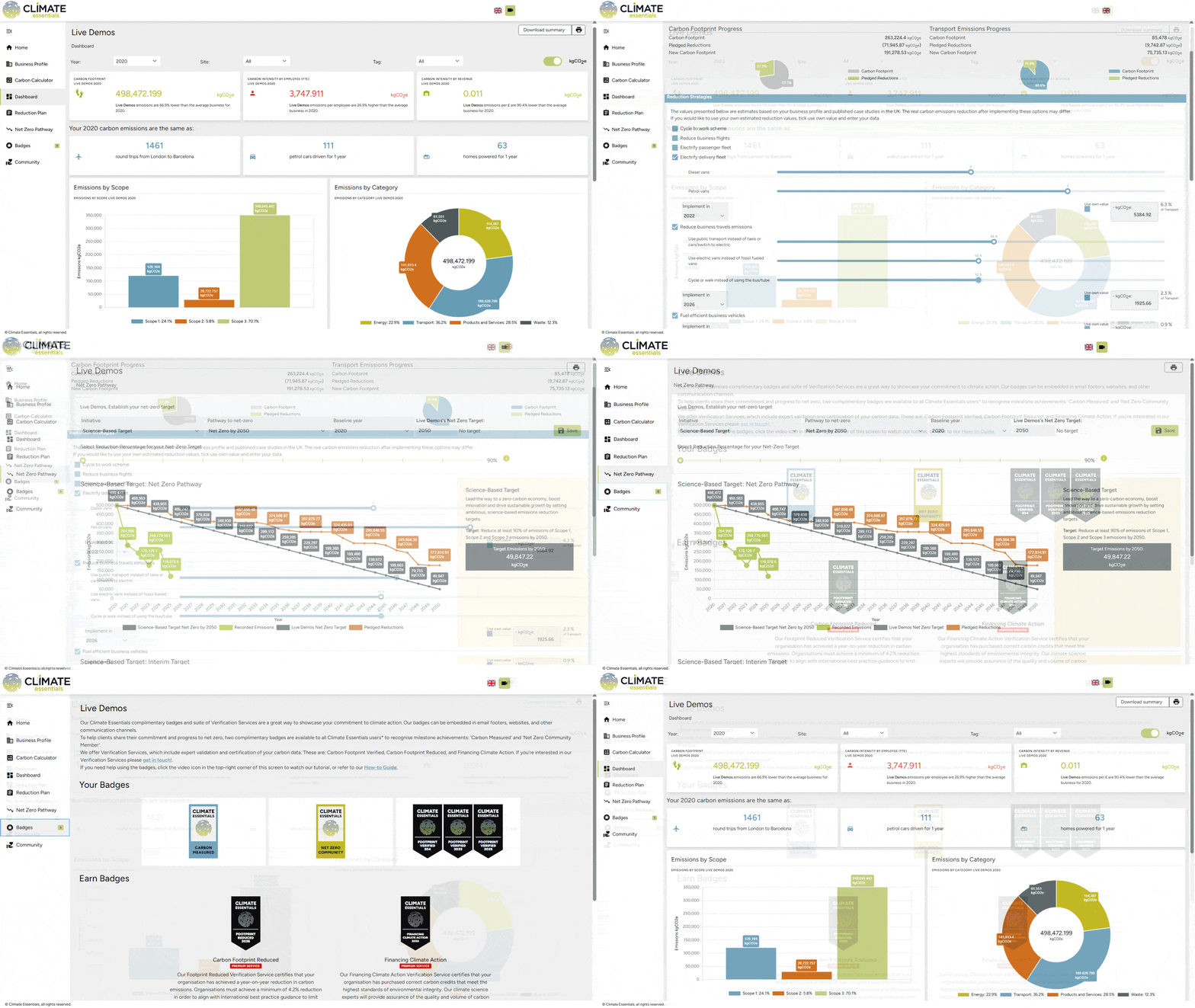
A dashboard to track emissions over time, model reduction scenarios, and demonstrate credible climate commitments to investors and stakeholders.
Climate Essentials combines software, expert services and supply chain tools, so every organisation can take credible climate action, regardless of size or starting point.
The core platform. Measure, track and report your emissions with GHG Protocol methodology built in.
Hand it over. Our team manages your carbon accounting end-to-end so you can focus on running the business.
Independent verification of your carbon footprint, reductions and offsets, to procurement and investor standard.
Invite suppliers to report their emissions directly. Replace industry averages with primary data and see your full Scope 3 picture.
Grounded in what companies are preparing for CSRD right now.
Climate Essentials is a carbon accounting platform, not a full CSRD compliance suite. CSRD covers all ESRS standards (E1–E5, S1–S4, G1). We focus specifically on ESRS E1: Climate Change, which is the emissions measurement and reporting layer.
What we do: measure your Scope 1, 2 and material Scope 3 emissions, produce ESRS E1-ready disclosures, collect supplier data for your Scope 3 baseline, and verify your numbers independently. What we don't do: full double materiality assessments, CSRD assurance audits, or EU supply chain due diligence mapping. Those require specialist consultancies, and they need your carbon data first, which is where we come in.
Large EU public-interest entities (500+ employees) are already reporting for financial year 2024. All large EU companies (250+ employees, or €50m+ turnover, or €25m+ balance sheet) report from financial year 2025. Listed SMEs are phased in from 2028, with a voluntary opt-out until 2030.
If you're in someone's supply chain and they're CSRD-obligated, they may ask you for emissions data well before your own reporting deadline. Getting your carbon baseline now avoids a scramble later.
Yes. Carbon accounting methodology is international; the GHG Protocol and ISO 14064 are the same standards whether you're in Frankfurt, Dublin or London. Our platform uses European grid emission factors.
Our supply chain tool sends automated measurement requests to your suppliers, tracks responses, and consolidates the data into your Scope 3 baseline. Suppliers who don't yet measure their own emissions can use Climate Essentials to do so, at no cost to them, so the data you receive is primary, not estimated.
This matters for CSRD because ESRS E1 expects auditable data provenance. Spend-based estimates are acceptable as a starting point, but auditors increasingly want to see primary supplier data where material. Our tool gives you both.
Our in-house verification service provides ISO 14064-3 aligned third-party verification of your carbon footprint. This covers the accuracy of your emissions data, methodology, and data provenance.
For full CSRD assurance, the statutory audit of your sustainability report under ISAE 3000, you'll need an accredited assurance provider (typically one of the Big Four or a specialist ESG auditor). Our verification gives you the underlying data assurance that makes their job faster and your audit smoother.
Yes. The platform supports multi-site measurement with country-specific grid emission factors across all EU member states. You can consolidate emissions from offices, warehouses, manufacturing sites and supply chains across different countries into a single organisational footprint.
Each site's data retains its country-specific methodology, so your French office uses French grid factors, your German warehouse uses German ones, while the consolidated report meets ESRS E1 requirements at the group level.
Book a 30-minute demo. We’ll show you how Climate Essentials helps with CSRD, ESRS E1, and full supply chain measurement
.png)